


Story
What happens to people who don't have what we had?
After losing her husband Phil to MND, Helen O’Neill is speaking out about the realities of caregiving, regional healthcare gaps, and the urgent need for better support.
When Helen O’Neill travelled from rural Tasmania to Parliament House earlier this year, she carried with her more than grief.
She carried the reality of what it means to care for someone living with motor neurone disease in a system that is simply not built for it.
Standing before parliamentarians at the launch of MND Australia’s Parliamentary Friendship Group for motor neurone disease, Helen shared the story of her husband Phil, a fiercely independent outdoorsman who died in July 2025, just 280 days after his diagnosis.
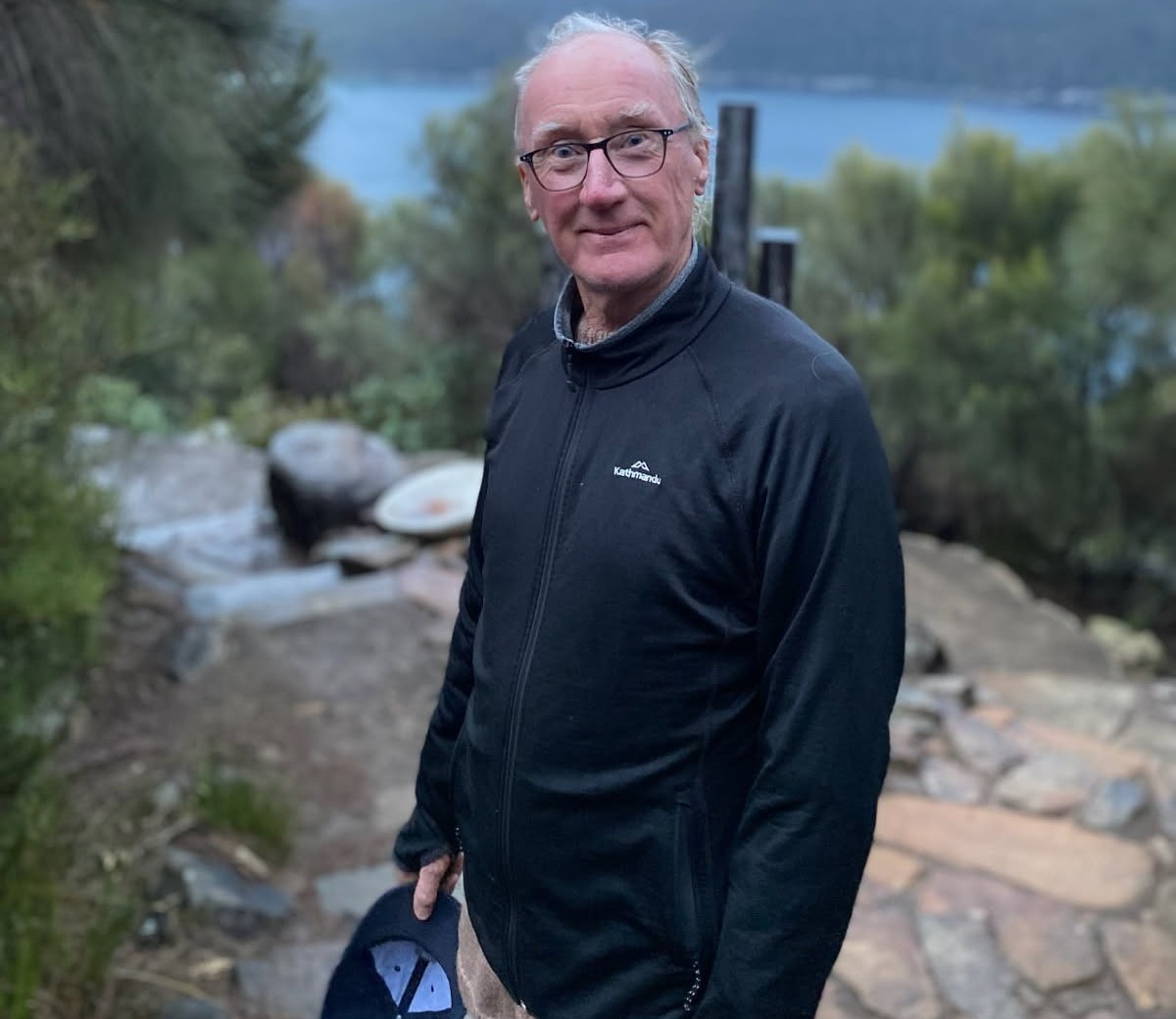 Phil O'Neill enjoyed an active life in Tasmania before his MND diagnosis.
“Motor neurone disease is not a battle,” Helen told the room. “It is a war. And for Phil, MND was the winner.”
Phil had lived a big life in Tasmania’s northwest. He loved surfing, bushwalking, kayaking, music, photography and community. Helen describes him as magnetic, funny, and “absolutely a larrikin.”
Then, almost overnight, everything changed. Within weeks, Phil developed breathing difficulties, confusion, swallowing problems and mobility issues. By October 2024, he was diagnosed with rapid onset bulbar MND. The progression was devastatingly fast.
Helen says the response from the specialist MND Clinic team and MND Tasmania was immediate. Alongside urgent referrals for respiratory support, allied health and equipment, Phil’s MND Care Coordinator and clinical team also arranged an urgent referral to palliative care, helping the family access support early as his condition rapidly progressed.
“Within six weeks of Phil’s first symptoms, I went from being a wife to being a full-time, 24-hour carer”
Helen’s 52-year nursing career helped her navigate the clinical realities of MND. Even then, she says the system failed them. An urgent aged care assessment was requested shortly after Phil’s diagnosis.
Despite his rapidly deteriorating condition, Helen was initially told they may not hear back until the end of February. “It was the beginning of November,” Helen recalls. “I said, ‘My husband will be dead by then unless we get some assistance.’”
When support finally arrived months later, it amounted to one hour of personal care twice a week and four hours of respite every fortnight.
But MND is not a disease that pauses between appointments. Phil required constant care. He needed help with mobility, feeding, ventilator use, medications, choking prevention, toileting and emotional support. Overnight, he woke every one to two hours struggling to breathe or needing assistance.
“There was nowhere for him to go,” Helen says. “The system relies on families taking on that burden completely alone.”
Living in regional Tasmania added another layer of complexity to Phil’s care. Accessing specialised nursing support, respite services and appropriately trained providers was often difficult, delayed, or simply unavailable locally.
Throughout their journey, Helen says the support of MND Tasmania was invaluable. Their MND Care Coordinator helped connect the family with services, advocated for urgent assessments, and provided guidance during an overwhelming and rapidly changing time.
For Helen, that support became a critical lifeline in a system that too often felt impossible to navigate alone. What sustained them was not the system, but community. Neighbours built ramps. Friends sourced equipment. Retired nurse friends stepped in so Helen could rest.
Their daughter took time off work to help care for her father, with additional support provided by their son in law, sons, grandsons, and partners, all pitching in with chores.
Phil’s mates came to sit with him, play records, reminisce and, when he was strong enough, help him continue doing the things he loved.
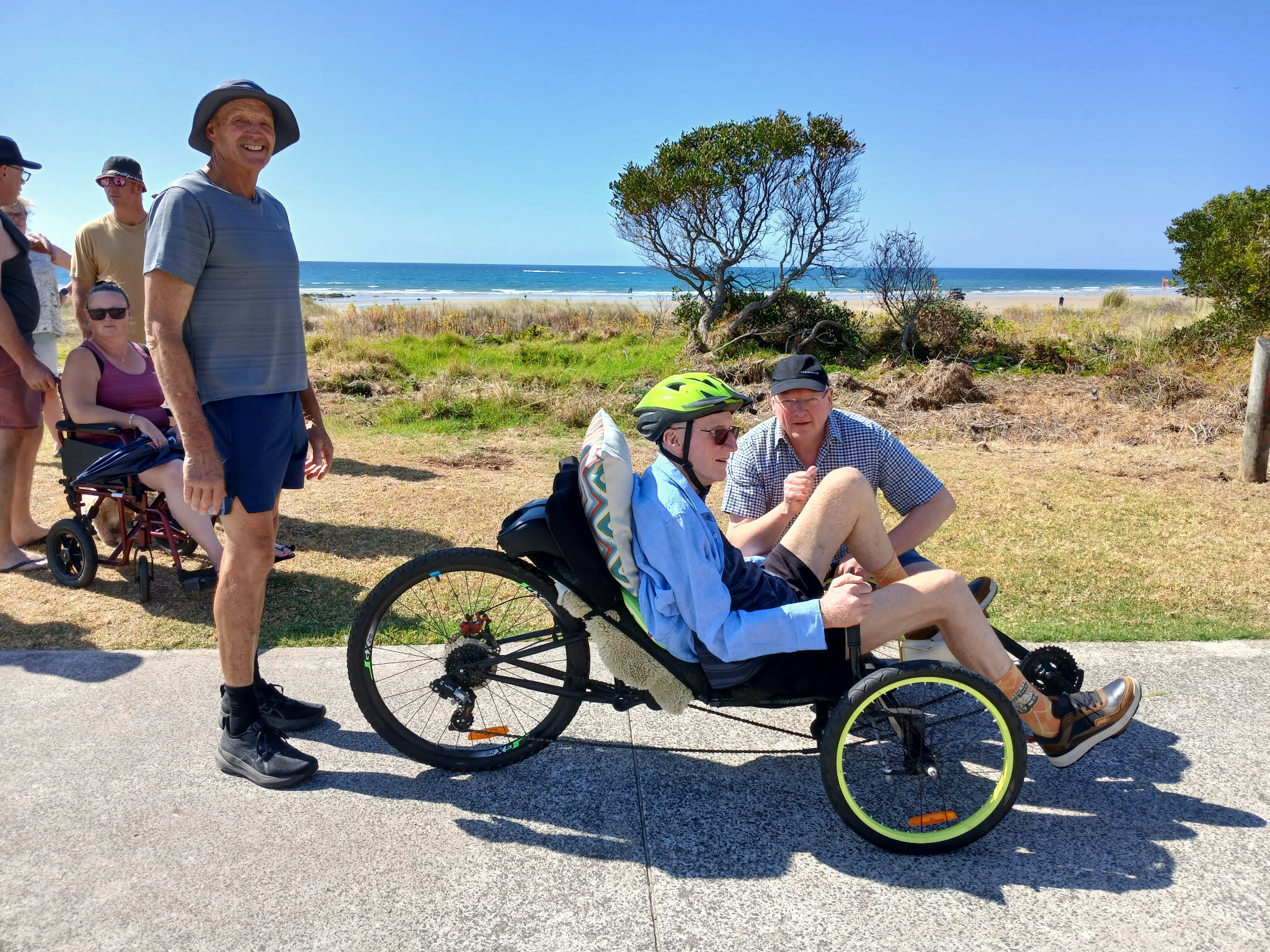 Phil O'Neill on his modified bike near the ocean with family and friends.
One of those moments came when friends rallied to help Phil achieve two final goals: riding a recumbent bike along a coastal path he had helped champion and returning to the ocean one last time. With the help of family, surf lifesavers, and close friends, Phil was carried across the sand and into the water.
“The grin on his face,” Helen recalls. “It was incredible.”
Even as his world narrowed, Phil remained deeply concerned about the impact his illness was having on his family. “You people could be more constructive with your own time than taken up with me,” he told Helen during one difficult conversation.
As Phil’s illness progressed, conversations about dignity, choice and control became an important part of the family’s journey.
Early after his diagnosis, Phil chose to explore voluntary assisted dying, something Helen says brought him an enormous sense of peace. Supported by his palliative care team, GP and physicians, Phil was able to openly discuss his end-of-life wishes and options.
Helen describes the process and the healthcare professionals involved as deeply compassionate and respectful.
“He didn’t want to die,” she says, “but he felt relief knowing he had a choice and some control.” Phil often said, “I can control the MND, not have it control me.”
As the disease progressed, he took comfort in being able to make decisions about how he wanted his final days to look, spending meaningful time with family and friends.
Helen acknowledges that voluntary assisted dying is deeply personal and that every individual and family will hold different views but says it was important that Phil’s wishes remained his own.
For Helen, sharing their story publicly is about making sure others are seen and heard.
“What happens to people who don’t have what we had?” she asks. “We had community. We had family. I had nursing experience. And it was still bloody tough.”
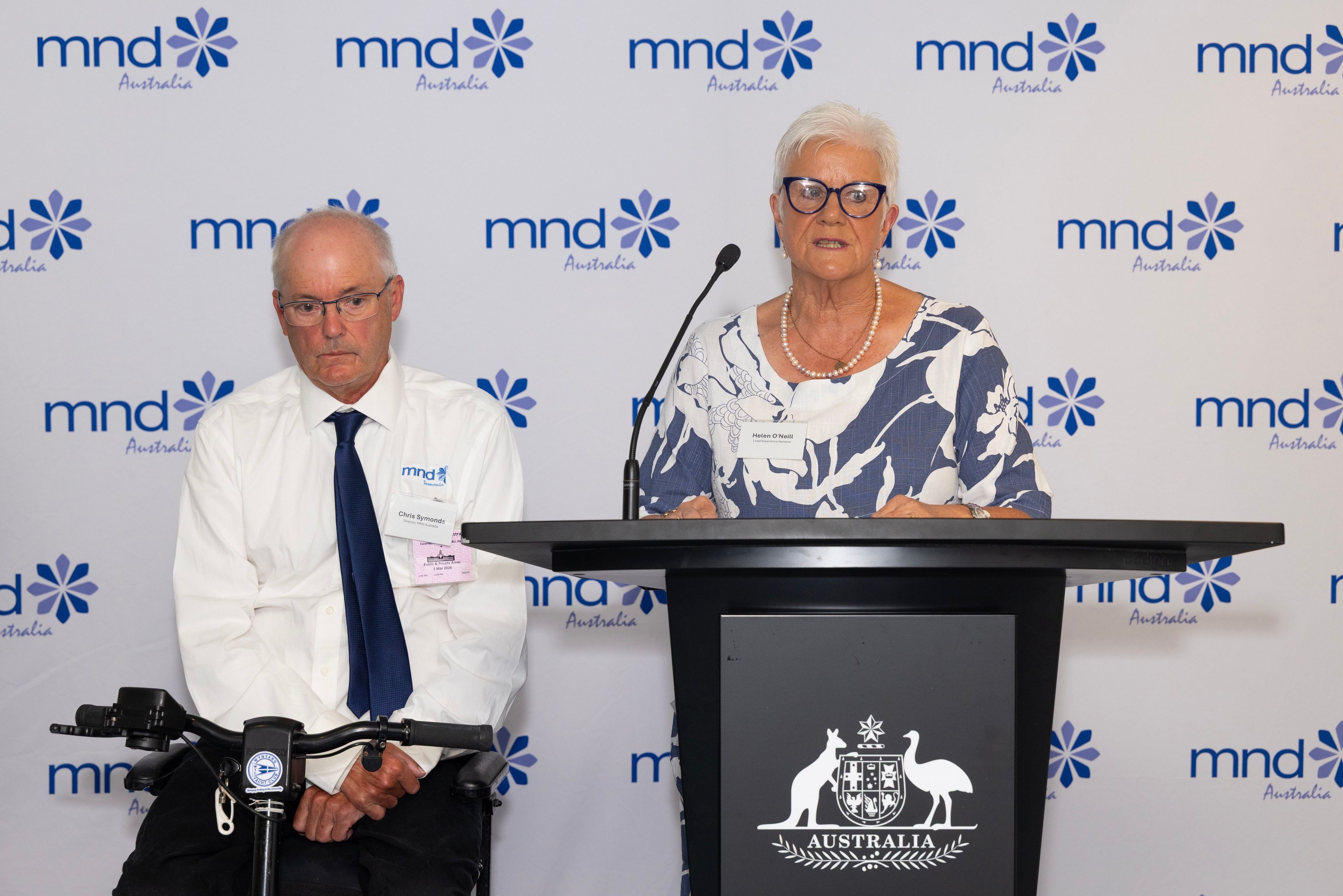 Helen O'Neill speaks at Parliament House, alongside MND Tasmania President Chris Symonds.
That question now drives her advocacy. At Parliament House, Helen spoke plainly about the realities families face behind closed doors. She wanted decision-makers to understand that quality end-of-life care should not depend on luck, geography, or whether a family has the skills to hold an overwhelmed system together.
“People living with MND deserve to be cared for at home, surrounded by love, with the best quality of life possible,” she says. “No matter their age or where they live.”
This article was originally featured in Issue 3 of Momentum magazine. Read the full magazine here.